Top Industries Using Visa Sponsorships to Fill Essential Roles
Manufacturing Labor Shortages: H-2B Visa Solutions | Vanteo
11:31
How can H-2B visas solve manufacturing labor shortages? The H-2B visa program allows manufacturers to hire temporary international workers for predictable production spikes and seasonal demand cycles. This flexible staffing solution helps fill gaps when local labor shortages occur, reducing overtime costs and maintaining production continuity without long-term employment commitments. Ideal for recurring peak seasons, the H-2B program enables manufacturers to scale their workforce up or down based on demand while protecting core teams from burnout.
Manufacturing production cycles rarely follow a straight line. Demand fluctuates, orders surge during peak seasons, and suddenly your facility needs 30% more hands on deck. Yesterday. But local labor markets can't always keep pace with these temporary spikes, leaving manufacturers scrambling to meet production targets.
When local talent dries up during critical production periods, the consequences ripple through your entire operation: missed deadlines, exhausted teams, quality control issues, and strained customer relationships. But there's a strategic solution that forward-thinking manufacturers are increasingly turning to: temporary staffing powered by international workers through the H-2B visa program.
This workforce management strategy offers the flexibility manufacturers need to scale labor up or down based on actual demand, without the overhead of permanent hiring or the risks of being chronically understaffed.
Manufacturing Staffing Gaps During Production Peaks
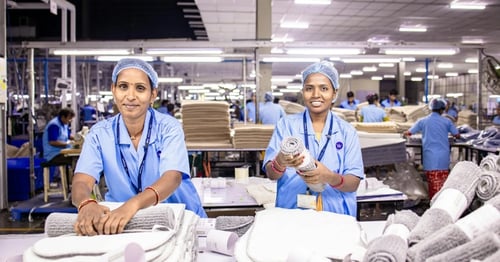
Manufacturing facilities face predictable workforce challenges tied directly to production cycles. Seasonal demand surges, new contract fulfillment, and product launch periods create temporary but significant staffing needs that sometimes your core team can't handle alone.
These labor shortages put enormous pressure on full-time employees, who are often asked to work excessive overtime to compensate. Meanwhile, local labor pools—already stretched thin in many markets—struggle to provide qualified candidates for temporary positions. The result is a staffing gap that threatens both productivity and employee morale.
Traditional hiring approaches fall short because they're designed for permanent positions, not the flexible, scalable workforce that modern manufacturing demands. This is where strategic temporary staffing becomes essential.
The Risks of Understaffing During Manufacturing Peak Productions
Operating short-staffed during your busiest production periods isn't only inconvenient, it's costly and potentially dangerous. When manufacturers can't fill critical positions during peak cycles, several serious risks emerge.
- You may miss production targets and delivery deadlines, directly impacting revenue and customer satisfaction.
- Overtime costs skyrocket as your existing team works extra hours to compensate, while employee burnout becomes inevitable.
- Exhausted workers make more mistakes, leading to quality control issues and increased safety incidents on the production floor.
Perhaps most concerning, chronic understaffing during peak periods damages your reputation with customers and can result in lost contracts. In today's competitive landscape, you can't afford production interruptions caused by workforce shortages.
A Strategic Workforce Solution for Manufacturers
Strategic temporary staffing for manufacturing means augmenting your core workforce during predictable demand spikes. This approach allows you to maintain a lean, efficient full-time team while adding temporary capacity precisely when and where you need it.
The benefits of this model are significant.
- You gain the ability to scale labor up during peak seasons and scale back down when demand normalizes, without the financial burden of year-round payroll for positions you don't always need.
- Your core team avoids burnout because they're not regularly working overtime, and you maintain production continuity even when local hiring markets are tight.
Effective workforce management means viewing temporary staff as an integrated part of your operational strategy, not a last-minute fix. When planned properly, temporary workers become a reliable resource that helps you navigate the natural ebbs and flows of manufacturing demand.
International Labor: Solving Local Talent Shortages
What happens when local labor markets can't provide the temporary workers you need? Many manufacturers are discovering that international temporary labor offers a practical solution to this common challenge.
International temporary workers can fill predictable production gaps that local hiring can't address, whether due to low unemployment rates in your area, lack of needed skills, or insufficient interest in temporary positions. These workers are available for the duration of your production cycle and return home when the peak period ends, giving you genuine workforce flexibility.
The key advantage is that you're not making long-term headcount commitments. You're accessing a reliable labor pool specifically for the temporary periods when you need additional capacity, then scaling back naturally as production demands decrease.
Download The Complete H-2A Visa and H-2B Visa Guide for Employers: Building Your Seasonal Workforce, a free, practical guide to securing reliable workers for your peak production periods.
The H-2B Visa Program for Manufacturing Employers
The H-2B visa program allows U.S. employers to bring international workers to the United States for temporary, non-agricultural positions when qualified U.S. workers are not available.
For manufacturers, this program is particularly relevant for production roles that are seasonal, peak-load, intermittent, or one-time occurrences. Common qualifying positions include:
- assembly line workers
- machine operators
- warehouse personnel
- packaging specialists
- quality control technicians
Essentially the production roles that surge during your busiest cycles.
The visa is specifically designed to support businesses facing temporary labor needs, making it an ideal fit for manufacturers dealing with predictable production spikes. Unlike permanent immigration options, the H-2B visa is built around the concept of temporary employment tied to your actual business needs.
Benefits of H-2B Workers for Manufacturing Production
Incorporating H-2B visa workers into your workforce strategy delivers several operational and financial advantages:
- Workforce flexibility: You can bring in qualified workers precisely when your production schedule demands it, then release them when the cycle completes. This eliminates the waste of paying for capacity you don't need year-round.
- Reduced overtime and burnout: Your full-time employees maintain reasonable work hours even during peak periods, protecting their health, safety, and job satisfaction. This leads to better retention of your core workforce.
- Improved production continuity: With a reliable temporary workforce strategy in place, you're not scrambling to find workers at the last minute. You can plan ahead and ensure adequate staffing for every production surge.
- Better cost control: The H-2B approach often proves more economical than continuous overtime pay, rushed local hiring, or the revenue lost from missed production targets. You're making strategic labor investments tied directly to revenue-generating activities.
Is H-2B Right for Your Manufacturing Operation?
The H-2B program may not be the right fit for every manufacturer, but certain operational patterns suggest you could benefit significantly:
-
Recurring seasonal spikes: If your facility experiences predictable busy periods year after year—holiday manufacturing, summer production runs, or harvest-related processing—you're an ideal candidate.
-
Chronic short-term hiring challenges: When you consistently struggle to find enough local workers for temporary positions during peak cycles, international labor provides an alternative talent pool.
-
High turnover during peak cycles: If temporary local hires frequently quit mid-season or fail to complete their employment period, the commitment and reliability of H-2B workers can improve your operations.
-
Growing production demands: As your business expands and production cycles intensify, having access to scalable temporary labor becomes increasingly critical.
Download our free checklist to evaluate whether your organization qualifies for the H-2B visa temporary worker program.
Managing Your Temporary Manufacturing Workforce: Best Practices
Successfully integrating temporary international workers into your production operations requires thoughtful preparations and management.
Align workforce planning to production forecasts: Start by analyzing your historical production data to identify patterns and predictable peaks. Use this information to determine when you'll need temporary staff and how many workers are required. The more accurate your forecasting, the more effective your temporary staffing program becomes.
Invest in training and onboarding: Temporary workers need to understand your safety protocols, quality standards, and production processes. Develop streamlined training programs that get H-2B workers up to speed quickly while maintaining your quality and safety benchmarks. Clear communication and visual training aids help overcome any language barriers.
Prioritize compliance and documentation: The H-2B program comes with specific regulatory requirements around wages, working conditions, housing (if applicable), and employment duration. Maintaining meticulous records and adhering to all program rules protects both your business and your workers.
Work with a visa specialist: Navigating the H-2B application process, timing requirements, and regulatory landscape is complex. Partnering with experienced immigration professionals ensures your applications are filed correctly and can be approved in time for your production cycles.
Proactive Workforce Planning: Prepare for Future Peaks
When it comes to temporary workforce management, waiting until you're already in the middle of a labor shortage crisis is too late. The H-2B application process requires advance planning and has specific filing deadlines.
Start planning for your next peak production cycle at least 6-9 months in advance. This gives you time to complete the necessary paperwork, secure visa approvals, arrange travel and housing logistics (if necessary), and prepare your facility for incoming workers. Early coordination between your human resources, operations, and leadership teams ensures everyone is aligned on workforce needs and timing.
Most importantly, view temporary staffing—including the H-2B program—as part of your long-term workforce strategy, not an emergency backup plan. When temporary labor becomes an expected, planned component of your operations, you transform it from a reactive scramble into a strategic advantage.
Optimize Your Manufacturing Workforce Strategy
Don't let staffing gaps hinder your production. Partner with Vanteo to develop a resilient and flexible workforce plan tailored to your manufacturing needs, leveraging the power of international temporary labor.
We're here to help you navigate the H-2B visa program and secure the talent you need. Contact Vanteo today.
About Vanteo
Vanteo serves as the parent company for a comprehensive family of brands specializing in workforce solutions, cultural exchange programs, and process management, each benefiting from our integrated approach.
Seasonal Workers
Arkansas Global Connect (AGC) serves as our H-2A and H-2B seasonal workforce specialist, providing expertise in agricultural and non-agricultural temporary worker programs. AGC is Clearview Certified for ethical recruitment and manages the seasonal talent pipeline for industries including agriculture, hospitality, landscaping, and manufacturing.
Vanteo is not a law firm, and this information should not be considered legal advice. Participation in U.S. visa programs is subject to eligibility, regulatory requirements, and government approval. Past performance does not guarantee future outcomes.