
7 Questions Hotels Should Ask an H-2B Partner Before Peak Season
H-2B visa sponsorship lets hospitality employers hire international workers for temporary, non-agricultural roles during peak seasons. Employers must prove a temporary staffing need, secure a prevailing wage determination, file labor certification with the Department of Labor, then submit Form I-129 to USCIS. The program covers housekeeping, front desk, culinary, and maintenance positions.
Peak season hits, and your front desk is short-staffed. Housekeeping can't keep up. Your reservations are full, but your operations are stretched thin. If your hospitality business faces recurring seasonal staffing gaps, H-2B visa sponsorship may offer an answer.
In this article, we’ll share what H-2B sponsorship involves, how the program works, and what hospitality employers should know before applying.
Key Takeaways
- H-2B visa sponsorship allows you to hire international workers for temporary, non-agricultural roles when domestic workers are unavailable.
- The program requires you to demonstrate a temporary need—seasonal, peak load, intermittent, or one-time—before applying.
- Vanteo guides hospitality employers through prevailing wage determinations, labor certification, and compliance requirements.
- Filing timelines are strict: applications should begin 75 to 90 days before your start-of-need date.
- H-2B workers can fill housekeeping, front desk, culinary, and maintenance roles during your busiest months.
What Is H-2B Visa Sponsorship?
H-2B visa sponsorship is a legal process that allows U.S. employers to hire foreign nationals for temporary, non-agricultural work. The U.S. Citizenship and Immigration Services (USCIS) administers the program, while the Department of Labor oversees labor certification.
As a sponsor, you are responsible for the petition process, wage requirements, and worker protections. In most cases, participating employers become the direct employer responsible for complying with applicable H-2B requirements. Vanteo helps you navigate this regulated program to build reliable seasonal teams.
Why Hospitality Employers Turn to H-2B Sponsorship
The hospitality sector faces persistent labor market constraints. According to the American Hotel & Lodging Association, 65% of surveyed hotels last year reported staffing shortages. Hotel employment remains nearly 10% below pre-pandemic levels.
Housekeeping and front desk positions account for the most common challenges. When sufficient qualified U.S. workers are not available, rooms go unturned. Tables go unserved. Revenue opportunities disappear.
H-2B sponsorship addresses this gap by connecting you with motivated international workers who commit to your full season. These workers arrive ready to contribute in specific roles from day one.
How Does the H-2B Program Work for Employers?
The H-2B process involves multiple federal agencies and strict timelines. Here's what you can expect:
Step 1: Establish Temporary Need
Demonstrate that your staffing needs are for a temporary role(s). The Department of Labor recognizes four categories: seasonal need, peak load need, intermittent need, and one-time occurrence. Most hospitality employers qualify under seasonal or peak load need.
Step 2: Obtain a Prevailing Wage Determination
Request a prevailing wage determination from the National Prevailing Wage Center. This establishes the minimum wage you'll pay H-2B workers and those in similar positions at your property.
Step 3: File Labor Certification
File a job order with your State Workforce Agency and submit an H-2B application to the Office of Foreign Labor Certification. This step includes advertising the positions first to demonstrate that there are not sufficient qualified U.S. workers who are able, willing, qualified, and available.
Step 4: Submit the USCIS Petition
After receiving labor certification, file Form I-129 with USCIS. Once approved, your workers can apply for visas at U.S. consulates abroad.
What Roles Can H-2B Workers Fill in Hospitality?
Common hospitality occupations that may qualify include:
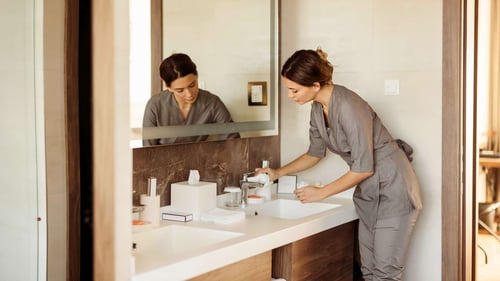
- Housekeeping and room attendants
- Front desk and guest services staff
- Culinary and kitchen support
- Maintenance and groundskeeping
- Food and beverage service
These positions must be temporary in nature, tied to your peak season, not permanent year-round operations. Workers stay for the duration of your certified labor need, with extensions and a maximum stay of three years possible, subject to continued eligibility, approved extensions, and applicable regulatory limits.
Not sure if you qualify? Read How to Determine if Your Business Qualifies for H-2B Visa Workers.
What Are Employer Obligations with H-2B?
Sponsorship comes with specific responsibilities.
- Pay the prevailing wage or the actual wage paid to similar workers, whichever is higher
- Cover or reimburse visa fees, transportation, and subsistence costs
- Offer workers a minimum number of hours (the three-fourths guarantee)
- Maintain accurate records of hours worked and wages paid
- Notify USCIS, when required, regarding material changes such as failure to report, abscondment, early completion, or termination.
Vanteo helps hospitality employers manage these compliance requirements, handling documentation and ensuring your program meets federal standards.
What are H-2B Cap Limitations?
Congress sets the H-2B visa cap at 66,000 per fiscal year, split between the first half (October through March) and second half (April through September). Supplemental visa allocations may become available, pending authorization from Congress or DHS. However, these are not guaranteed and come with their own filing windows and requirements.
Planning ahead matters. The earlier you begin your application, the stronger your position when caps are reached.
How to Evaluate an H-2B Visa Partner
Not all visa program partners operate the same way. When evaluating, consider:
Compliance Expertise
Your partner should understand DOL wage requirements, USCIS petition procedures, and consular processing. Mistakes can result in denied certifications or future filing restrictions.
Recruitment Network
Strong international recruitment channels help you access candidates who match your operational needs. Look for partners with established relationships in countries that supply hospitality workers.
Onboarding Support
The best partnerships extend beyond visa filing. Vanteo coordinates worker arrivals, housing logistics, and orientation, so your team integrates smoothly into operations.
When Should You Start the H-2B Process?
Timing is everything. If your peak season begins in April, you should initiate the application process by late fall of the prior year at the latest.
A typical timeline looks like this:
- 8+ months before need: Begin planning and partner selection
- 4-5 months before need: Submit prevailing wage request
- 3 months out: days before need: File job order and H-2B application
- 60 days before need: Submit USCIS petition after certification
- 30 days before need: Workers complete consular processing and travel
Your occupancy projections, service model, and property priorities directly shape how many workers you need and when. Delays at any stage can cascade. Building buffer time into your schedule protects your peak season operations.
How Vanteo Supports Hospitality Employers with H-2B Sponsorship
Vanteo specializes in H-2B seasonal staffing for the hospitality industry. From initial workforce planning through worker arrival and onboarding, Vanteo manages the complexity so you can focus on operations.
What sets Vanteo apart is an integrated approach that combines regulatory expertise with practical hospitality knowledge.
Build Your Seasonal Workforce Strategy with H-2B
H-2B visa sponsorship offers hospitality employers a regulated approach to filling seasonal roles when local labor market constraints leave positions unfilled. The process requires careful planning, timeline adherence, and ongoing compliance management.
Start building your legal seasonal staffing strategy now. Next season's timeline is already in motion. Partner with Vanteo to develop a predictable, compliant international workforce approach that keeps your property fully staffed during your busiest months.


Subscribe to The Talent Advantage, our LinkedIn newsletter providing executive insights and practical advice on building legal international talent strategies that solve workforce challenges.
FAQ
What does it mean to sponsor an H-2B worker?
Sponsoring an H-2B worker means you petition the federal government to bring a foreign national to the U.S. for temporary employment. You become the employer of record, responsible for wages, working conditions, and compliance with program requirements. Vanteo simplifies this process by managing paperwork and ensuring your application meets all federal standards.
How long can H-2B workers stay at my property?
H-2B workers can stay for the duration specified on your temporary labor certification, typically one season. Extensions are possible in one-year increments, with a maximum total stay of three years. Extensions require a new temporary labor certification and petition.
What is the H-2B visa cap, and how does it affect my application?
Congress caps H-2B visas at 66,000 per fiscal year, split between two six-month periods. When applications exceed available visas, USCIS uses a lottery system. Supplemental visas are sometimes made available, but these are not guaranteed. Vanteo helps hospitality employers file early and accurately to maximize approval chances.
Can I hire the same H-2B workers every season?
Yes, returning workers are a key benefit of the H-2B program. Workers who performed well in previous seasons can return, bringing institutional knowledge and reducing your training time. Employers who want to bring back workers must complete a new labor certification and petition process.
What happens if my H-2B application is denied?
Denials typically result from documentation errors, missed deadlines, or failure to demonstrate temporary need. You have appeal rights through the Department of Labor. Working with an experienced partner like Vanteo reduces denial risk by ensuring applications are complete and compliant from the start.
About Vanteo
Vanteo serves as the parent company for a comprehensive family of brands specializing in workforce solutions, cultural exchange programs, and process management, each benefiting from our integrated approach.
Seasonal Roles
Arkansas Global Connect (AGC) serves as our H-2A and H-2B seasonal workforce specialist, providing expertise in agricultural and non-agricultural temporary worker programs. AGC manages the seasonal talent pipeline for industries including agriculture, hospitality, landscaping, and manufacturing.
Vanteo is not a law firm, and this information should not be considered legal advice. Participation in U.S. visa programs is subject to eligibility, regulatory requirements, and government approval. Past performance does not guarantee future outcomes.