

To qualify for the J-1 teacher cultural exchange program, international educators must meet seven requirements: (1) hold the equivalent of a 4-year U.S. Bachelor's degree in Education, verified by a ...
Articles About Blog
Page 2 of 5

Read Article →

H-2B visa sponsorship lets hospitality employers hire international workers for temporary, non-agricultural roles during peak seasons. Employers must prove a temporary staffing need, secure a ...

J-1 sponsors are U.S. Department of State-designated organizations that manage the compliance infrastructure for host schools. Their core responsibilities include issuing the DS-2019 form, ...
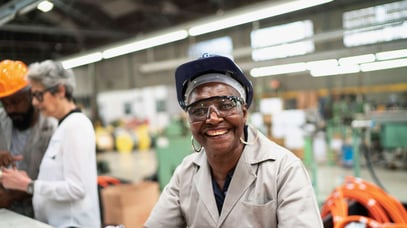
Multi visa sponsorship services help employers fill both seasonal and permanent workforce gaps by combining H-2A, H-2B, and EB-3 visa programs. H-2A and H-2B visas support temporary labor needs in ...

When an H-2B authorization ends, employers must ensure workers depart on or before the authorized end date, pay for return transportation if the worker completed the full contract, issue final wages ...

Charter schools are uniquely positioned for the J-1 Teacher program because of three structural advantages: decentralized teacher placement allows faster assignment of international educators, ...
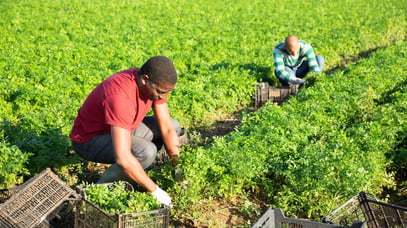
How can farms reduce labor turnover? Farms can reduce labor turnover by hiring through visa-sponsored workforce programs. The H-2A visa provides a reliable seasonal workforce with high year-over-year ...

Why should tourism businesses use H-2B international workers instead of relying only on local hiring? Local labor pools in resort towns and seasonal destinations are limited and highly competitive. ...

How does EB-3 sponsorship work for multi-unit retail operators? Multi-unit retail operators in the same metro area can file under a single anchor address and select "multiple locations" on the ...

Hospitality, construction, and retail are among the hardest-hit industries in the 2026 U.S. labor market. Hospitality reports an increasingly difficult hiring rate. Construction needs 349,000 new ...

How should schools prepare for J-1 teacher arrivals? Schools should begin preparation at least 30 days before the peak arrival window. Key steps include providing housing and other local resources ...

The H-2B visa is a nonimmigrant visa that allows U.S. employers to hire temporary, non-agricultural workers for seasonal or peak-period roles. Retail employers with demonstrable, recurring seasonal ...

The J-1 teacher cultural exchange program places internationally credentialed educators in U.S. schools for a defined period, creating mutual cultural exchange between teachers and students. ...
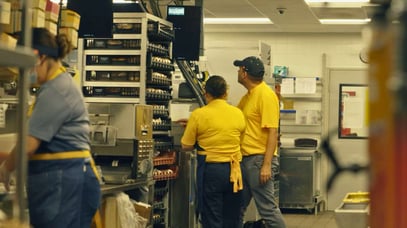
McDonald's franchise owner Kevin Dobski credits BDV Solutions (a Vanteo company) with helping his McDonald's operations survive labor shortages, maintain a 95% quality employee retention rate, and ...

EB-3 Other Worker visas allow rural food processing employers to sponsor foreign nationals for permanent U.S. residency in positions that require no advanced degree or specialized skill. Because ...

The H-2B visa program allows U.S. restaurants to hire temporary foreign workers for seasonal positions when the domestic labor supply falls short. Restaurants use H-2B to staff up during peak ...

International talent offers construction companies two distinct workforce strategy tools. EB-3 visas are an immigrant pathway that builds a permanent labor base over a three-to-five-year horizon. ...

EB-3 and H-2B visas offer construction contractors two distinct workforce tools. EB-3 is an immigrant visa pathway that builds a permanent labor base over a three-to-five-year horizon. H-2B is a ...

The top winter industries for seasonal international talent programs are retail and e-commerce, warehousing and logistics, hospitality and tourism, snow removal and property maintenance, ...

Employers in manufacturing, construction, hospitality, food processing, and agriculture use EB-3 visa sponsorship to solve structural labor shortages that traditional hiring cannot fix. The process ...

What are the benefits of a J-1 teacher cultural exchange program for rural schools? A J-1 teacher cultural exchange program gives rural students daily, immersive exposure to other cultures, something ...